Right now, at this moment, while all of our lives have turned upside down and inside out, it may seem impossible to look at something like the coronavirus pandemic and see anything but catastrophe. Yet, the human capacity to rise above, even in the most difficult of times, always has a way of shining through. We all face difficulties, not to be destroyed by them, but to help rediscover ourselves and extract the inner strength we are often unaware of having. During Wednesday’s virtual Rotary program, fellow Seattle 4 Rotarian, Rais Bhuiyan shares his experiences and inspiration as we navigate through this incredibly uncertain and frightening time together.
Shot by a white supremacist ten days after 9/11, Rais Bhuiyan not only survived this brutal hate crime, he went on to forgive his assailant and worked tirelessly to try and save him from death row. Rais later created the non-profit, World Without Hate (WWH), the manifestation of his death-bed promise, dedicating his life to disrupting hate and violence through storytelling and empathy education. To date, Rais has engaged with more than 250,000 people globally, from classrooms, college campuses, maximum-security prisons, refugee camps, religious forums, to town halls, city councils, and conferences. More information can be found at www.worldwithouthate.org.
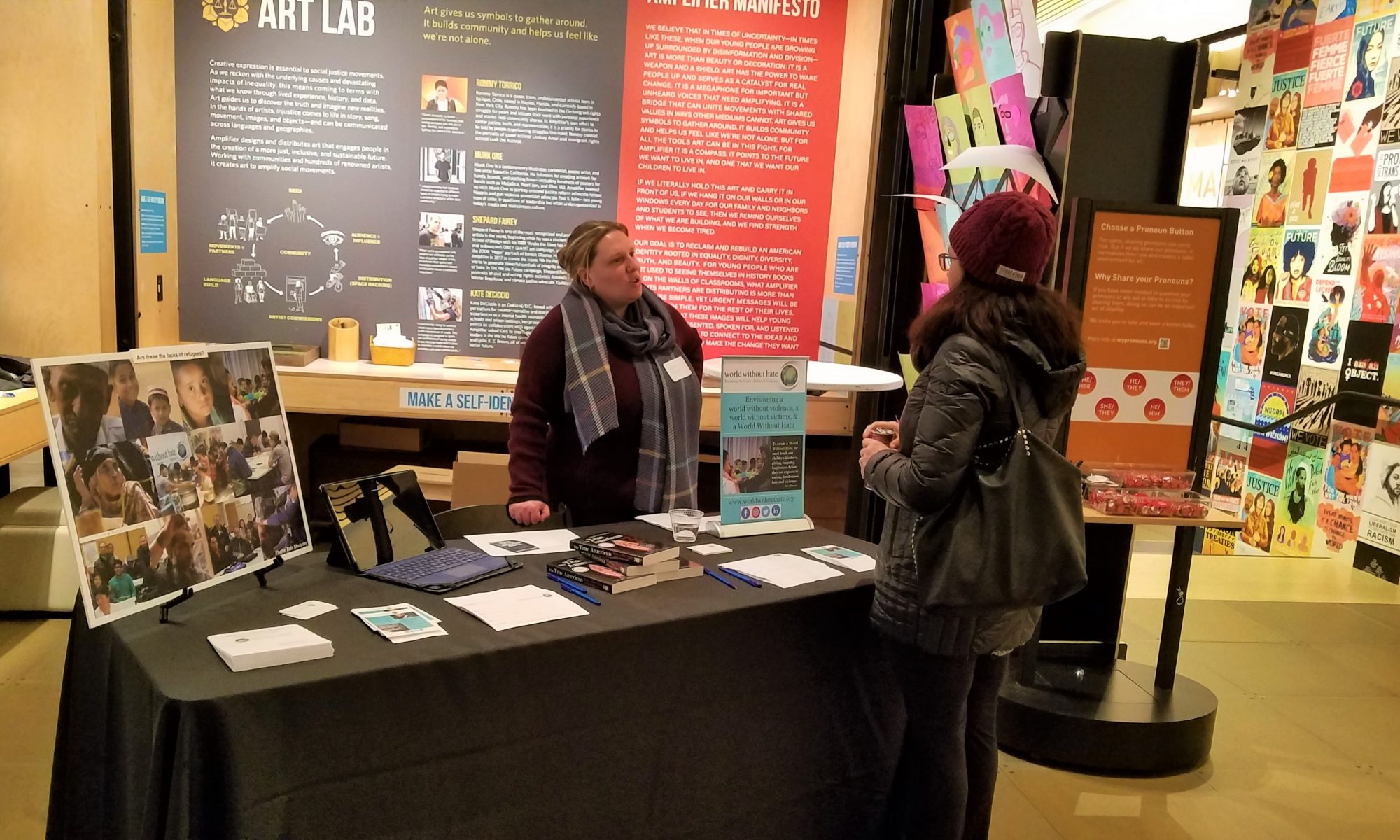
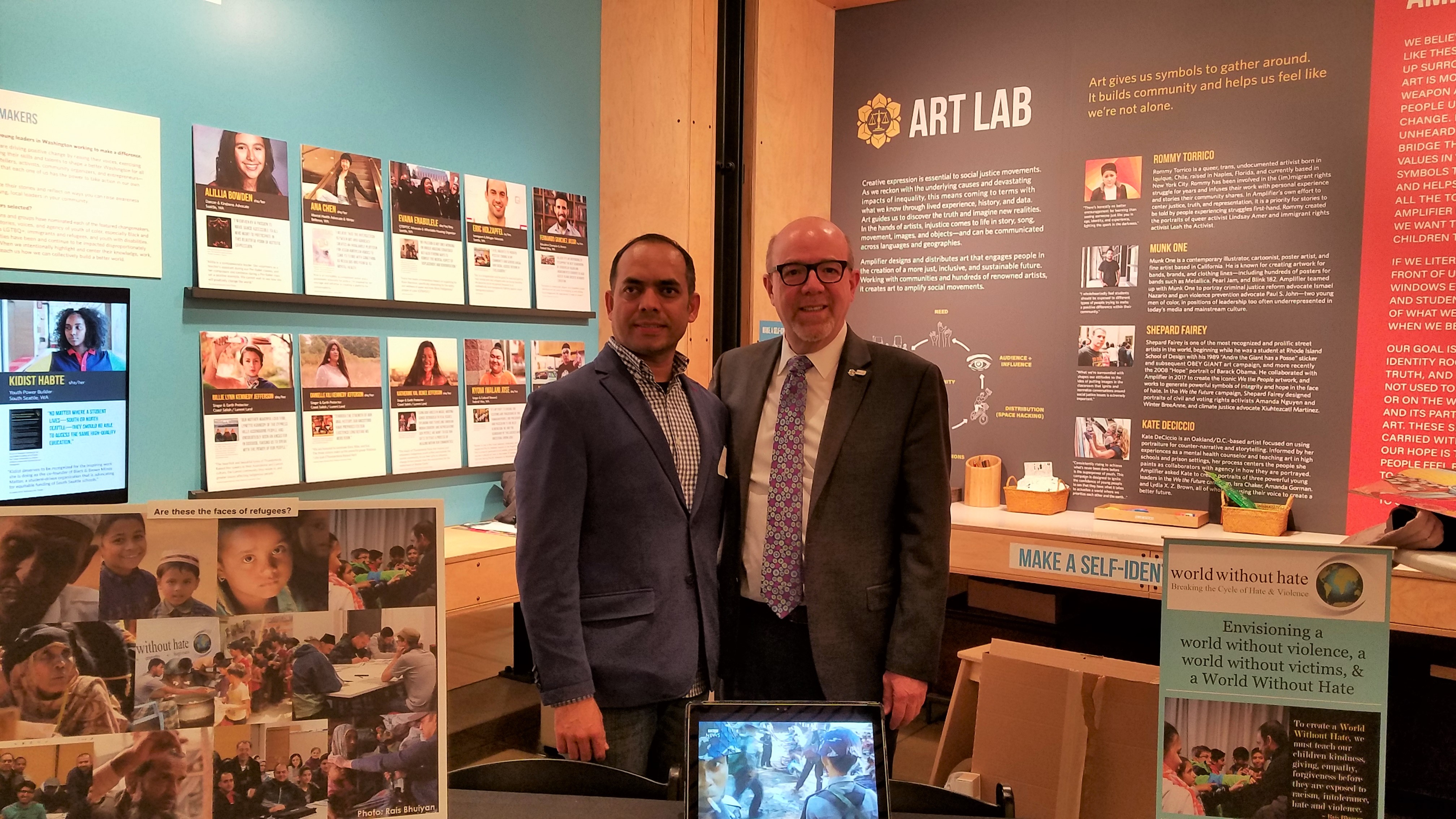
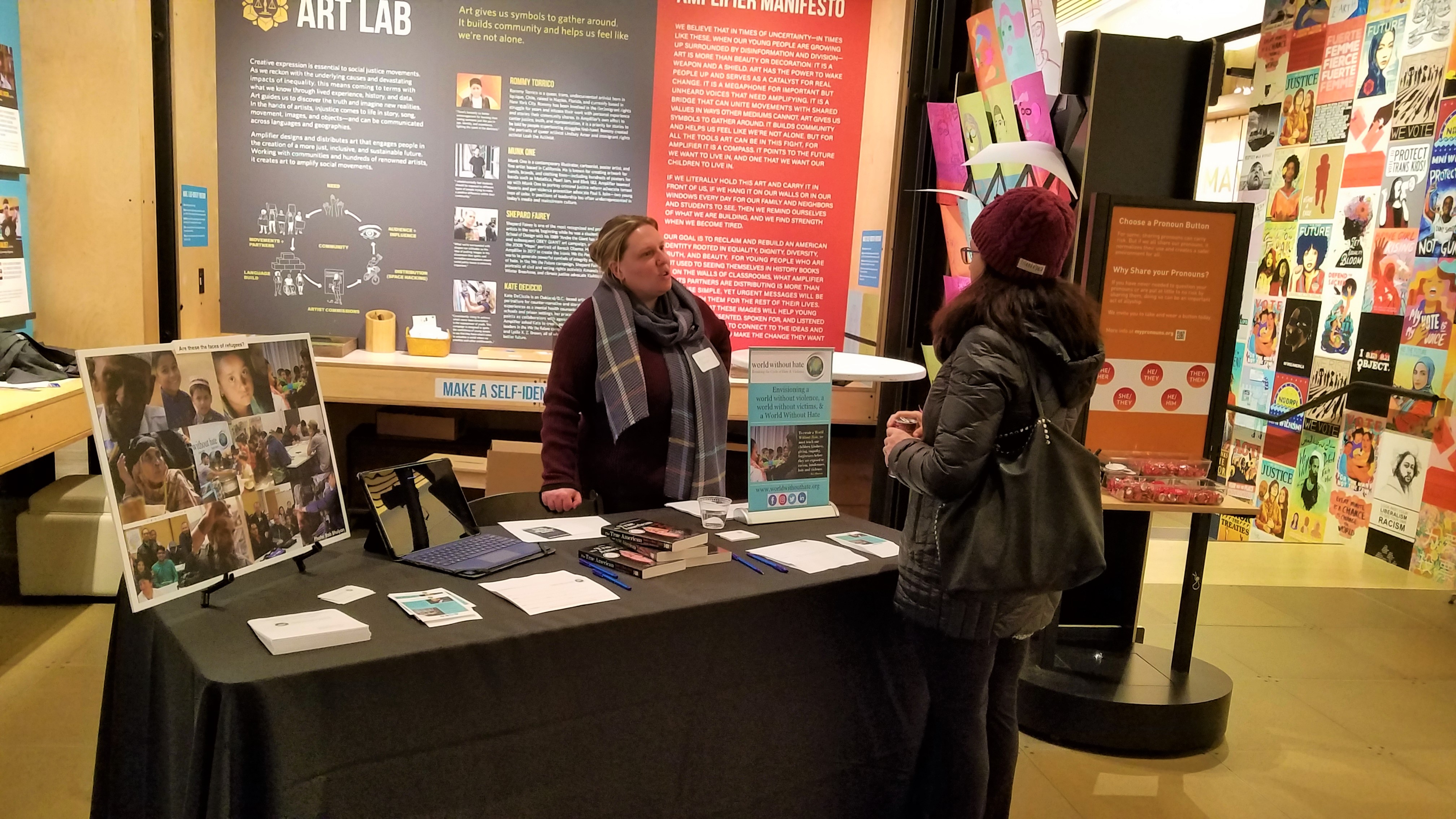
World Without Hate was proud to be a part of the Bill & Melinda Gates
Foundation Discovery Center’s ‘Supporting our Refugee Communities event’
with special guest Isra Chaker. The focus of
the evening was on civil activism, immigrant and refugee stories, and Isra’s
personal story as a young leader featured in the Discovery Center’s We the
Future exhibition.
World
Without Hate leaders and advisory board member, Howard
Cohen, enjoyed speaking with attendees and sharing our service offerings.
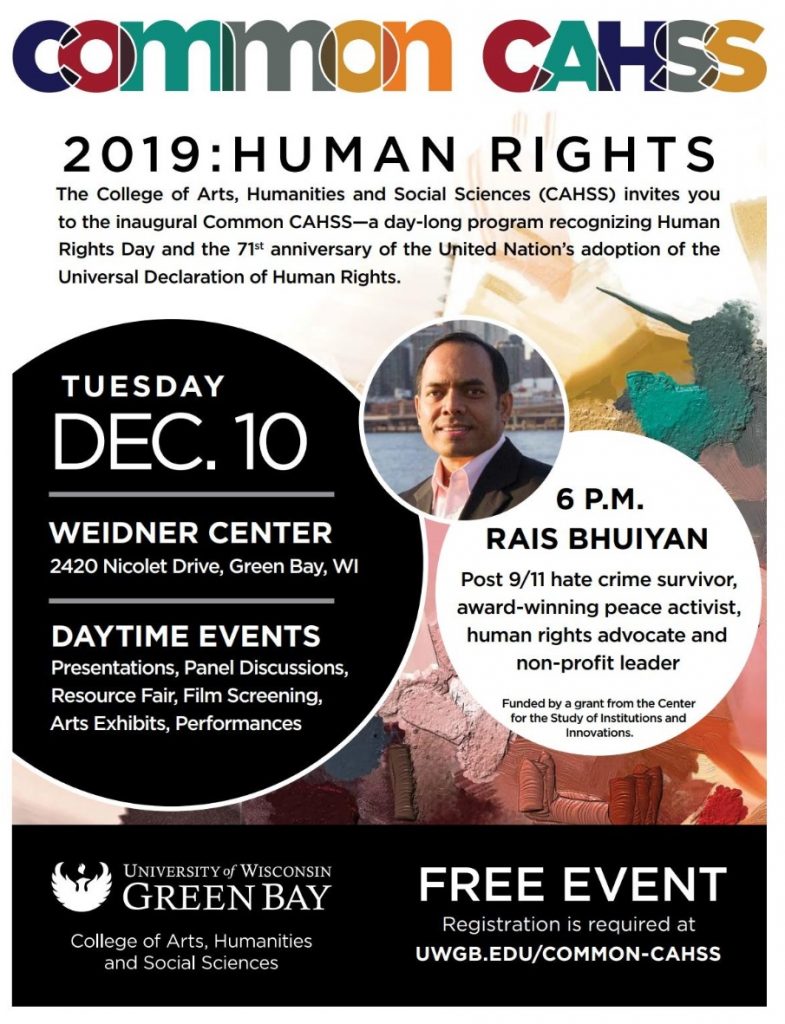
On International Human Rights Day, World Without Hate’s own Rais Bhuiyan gave the keynote address to students and faculty participating in University of Wisconsin at Green Bay’s Common College of Arts, Humanities and Social Sciences (CAHSS) program focusing on human rights issues, specifically on ‘how to combat hate and white supremacist violence.’
“Because of my encounter with a White Supremacist, I wanted to learn more about the root cause of hate and extreme ideology. I’ve been fortunate enough to speak and connect with people throughout the US, and around the world for several years now, including those who hate or have hated, and hurt others.
One commonality I’ve heard is that the perpetrator was at one time a victim too – a victim of the environment they grew up in and the people they associated with.
I have to come to learn that as with most learned behaviors, hate can be unlearned as well. We have the capability to turn negatives into positives, weakness into strength, fear into courage, ignorance into wisdom and hatred into love.”
Imagine a world without hate…a world where people seek opportunities to understand and empathize with those they believe are different than them…a world where people focus on similarities not differences…
Growing up in the Bible Belt, I was surrounded by people who fostered an “us versus them” rather than inclusive attitude. Racially charged jokes were not uncommon, interracial dating and marriage were viewed as a violation of God’s law, and those who worshiped differently than our Baptist church (Jews, Muslims, Catholics, Mormons, Seventh Day Adventists, to name a few) were deemed sinners who would not fare well on Judgement Day.
Shortly after moving North to attend a large public university, it was clear to me that I was more like “them” than the “us” of my youth. My closest friends in college included students from many ethnic, cultural, and religious backgrounds. I was intrigued by our differences and free – for the first time in my life – to challenge the racism and bigotry that I saw. (As a kid in my family, questioning an adult’s belief was often seen as “being sassy” and disrespectful.)
For the next three decades, I worked shoulder-to-shoulder with counterparts around the globe of different faiths and cultural backgrounds. Many of my professional successes – particularly those accomplished with international partners – were not in spite of our differences but BECAUSE of them. Given this, I was stunned at the level of fear and hatred of “the other”, especially Muslims, that I encountered when I retired. It quickly became apparent that these attitudes were a result of ignorance. Having lived, worked, and vacationed in Muslim-majority countries during my career, I began drawing on my personal experiences to dispel dangerous myths about Islam voiced within my community, and I accepted a position in a nonprofit, actively engaged in building bridges between people of different faiths and cultures.
It was during this time that I met Rais and Jessica Bhuiyan, of World Without Hate. I was not only inspired by Rais’ story of forgiveness but also his passion to break the cycle of hate and violence. Many will recall the “Arab” shootings in Texas, days after 9/11. Rais, mistaken as an Arab, is a survivor of that hate-filled violence. Remarkably, he not only forgave the man who shot him; he fought to save his life. Rais and his wife Jessica have dedicated their lives to teaching others the importance of forgiveness, compassion, empathy, understanding, and acceptance. With hate crimes on the rise, their mission is more important today than ever before.
Giving to World Without Hate will allow this nonprofit to partner with community level advocates and anti-hate organizations across the USA to tackle the roots of hate, by creating human encounters that foster respectful, honest conversations. Remember, ignorance breeds fear that can lead to hate; left unchecked, hate can lead to violence.
When Rais first
heard about the Rohingya crisis, he was a flight cadet in the Bangladesh Air
Force and couldn’t do anything except pray for these poor and vulnerable
people. When the crisis resurfaced in 2017, he had already experienced the
brutal pain of hate and violence firsthand being a victim of a violent post
9/11 hate crime. He had also gained a voice, and the strength to stand up
against hate, injustice and human suffering. His heart broke seeing the plight
of the Rohingya people and wanted to do whatever he could to help them, and to
bring awareness to this catastrophic issue. About
a year ago, Rais visited the camp to do relief work, as well as speak with many
of the refugees who asked him to share their stories and their voices. As part
of his promise to them, the documentary came to be.
Through the work of
our non-profit, World Without Hate, we focus our efforts on
breaking the cycle of hate and violence through storytelling and empathy
education. The documentary short Rais created is our way of telling the
Rohingya refugee story in hopes of bringing more awareness to and empathy for
the millions who are barely surviving in what has become the world’s largest
refugee camp. We may not be able to solve this humanitarian catastrophe
ourselves, but together, we can send a collective message that we support the
suffering, that we have not forgotten them or their plight, and we can utilize
our voices and urge our leaders to act.
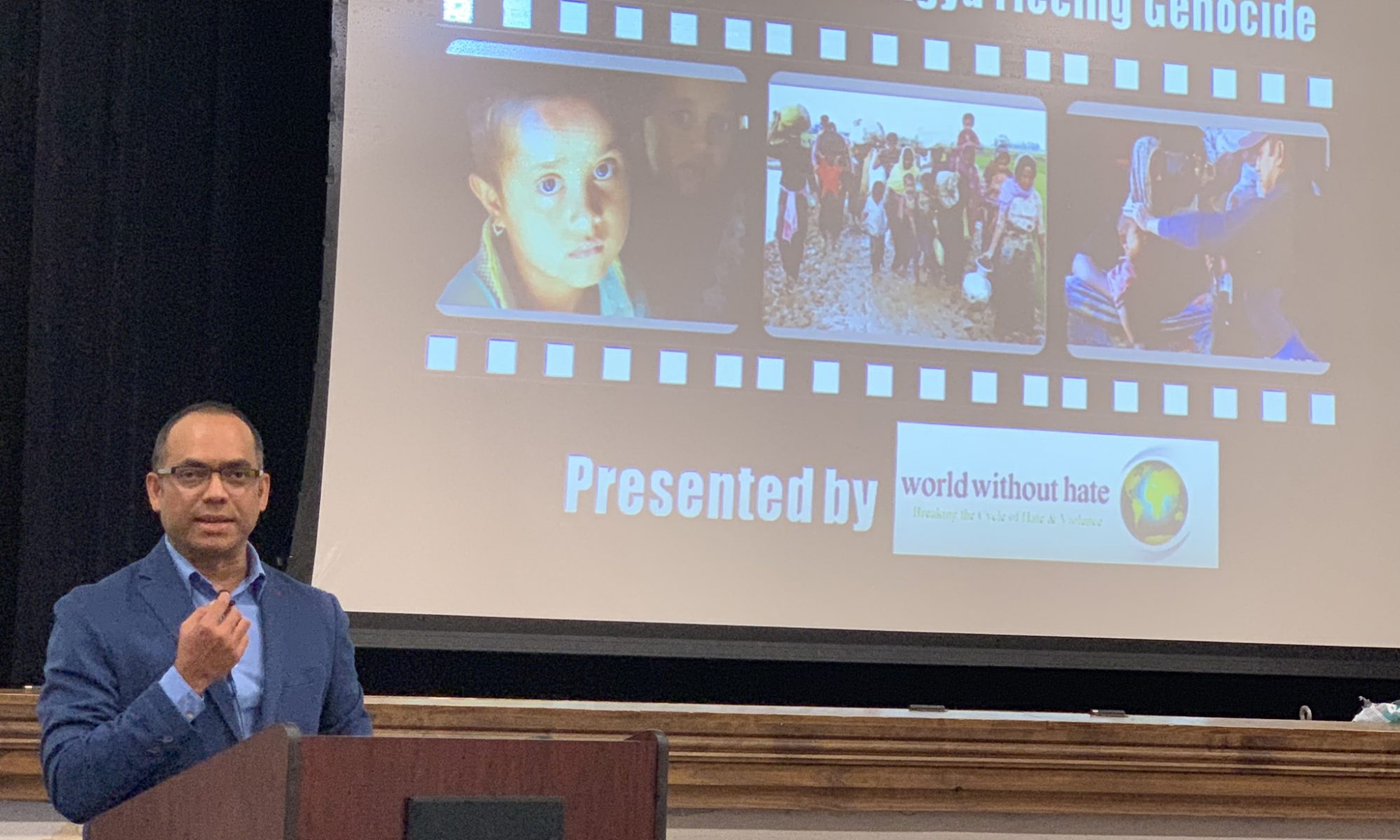
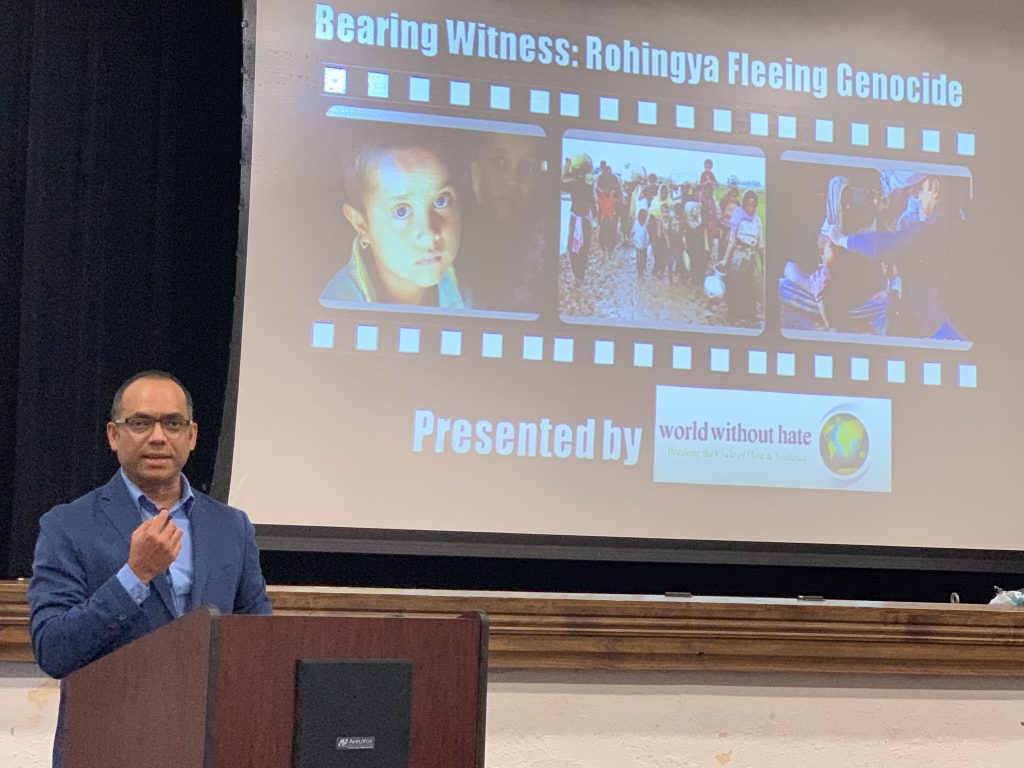
In this 15-minute short, Rais not only reflected
the plight of the Rohingya and the millions who are
barely surviving in the largest refugee camp in the world, but also proposed 5 points solution to end this
senseless human suffering.
We also hope that bearing witness to the plight of the Rohingya
reminds us of how much we have to be grateful for and in this, making the best
use of our resources to help eradicate hate and violence from our communities,
our nation, and our world. Together, we must stand up against human suffering.
Today, on International Peace Day, I am also commemorating my Rebirthday. Eighteen years ago, I faced extreme evil, and my life in America changed forever. I vowed not to define myself by that act of horror, but to respond by making a difference and helping others.
Though not in Manhattan or Washington D.C., I am a victim, and a survivor of the terror that reigned down upon our country on Sep 11, 2001. My attacker, who shot me in the face and killed two others, blamed me and my kind for 9/11, and said America was no place for Muslims,… until he learned about the international campaign I was leading to try and save his life from Texas death row. He hated me when he didn’t know me, but in the end called me, brother; and said he loved me before he was executed. His last words were “Hate has to stop. Hate causes a life time of pain.” Today, I see the reflection of his pain everywhere.
It is time for us all to admit where we are heading as a country, and as the human race. Hate crimes, gun violence, anti-immigrant rhetoric…extremism of all kinds are on the rise. Though we vowed, “never again” long ago, it appears we haven’t learned anything from history. The war on terror has caused and produced more terror, providing excuses for far too many to label people we don’t know as a threat, making it easy to persecute, suppress, and treat fellow humans as lesser than. We spend billions searching for life in space, but lives on earth continue being destroyed by unnecessary, unjust wars, violence, hunger, and disease. When millions of people dream of having access to clean water, or a roof over their head, desperate to live life with dignity, we spend even more in the arms trade and on new technology to control and kill.
All mothers hope to see their children flourish in a safe, loving and kind world. What can we do to save humanity and restore the world? Building peace is the answer. Peace begins within each of us, in our hearts & minds, at home first. We need to teach our children, and remind one another, to respect everyone equally, as human first, regardless of our differences. You may not like me or become my friend, but you can respect me as you want to be respected. No one is born to hate or to be violent. People are either taught to hate or go through challenges in their lives desensitizing them to others’ right to life, liberty, freedom, and happiness. That’s why we must teach our children kindness, compassion, empathy, and forgiveness before they are exposed to racism, intolerance, hate and violence.
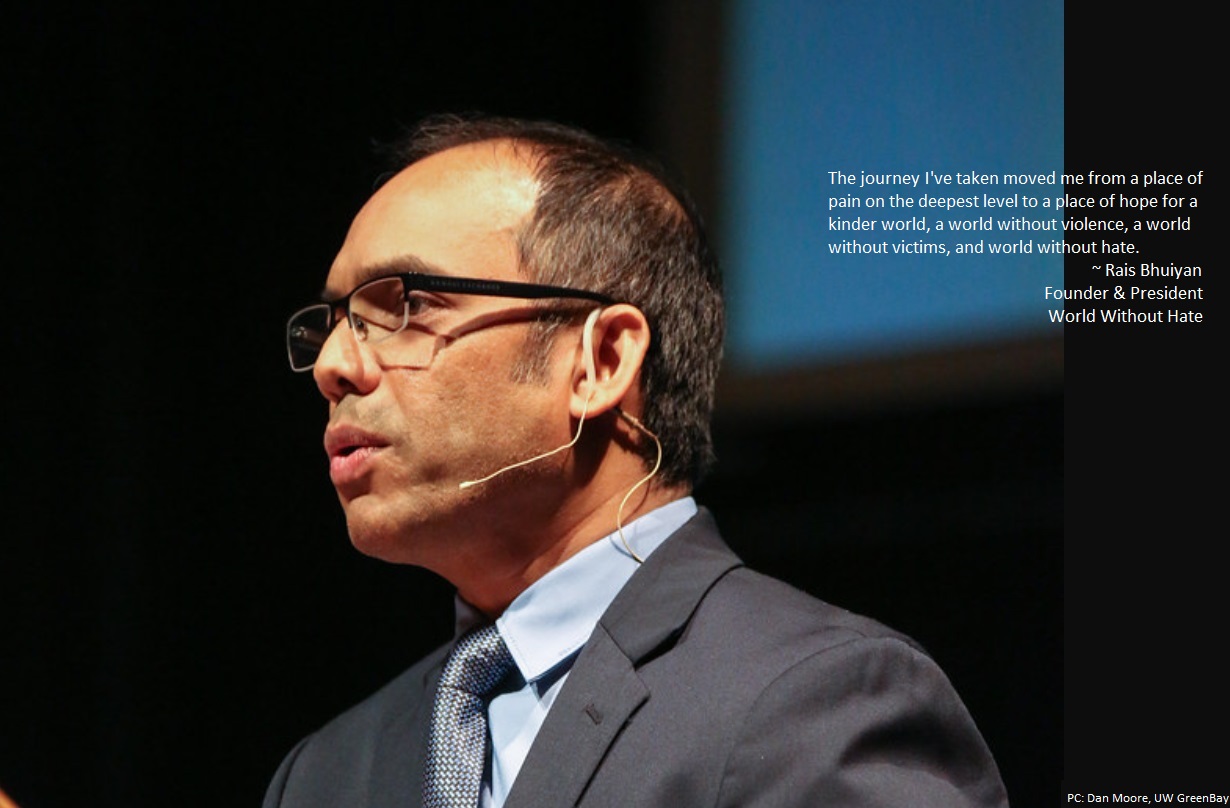
The lessons I’ve learned from my traumatic experience, and the painful journey I’ve taken, moved me from a place of pain on the deepest level, to a place of peace and hope for a kinder, just, and more accepting world. There is not a single day that goes by that I am not reminded of and impacted by my brutal attack, but I continue to make peace with my pain.
Today, as a human rights advocate, peace activist, non-profit leader, and motivational speaker, I have the opportunity to try and combat the hate and violence that has plagued our country, our world for far too long. I founded the organization, World Without Hate, with the hope we might all build bridges among one another, as opposed to walls; that through our powerful human attributes of forgiveness, empathy, and acceptance, we can begin to see how much more we have in common than that which seems to divide us.
On this international day of Peace, and my 18th rebirthday, I urge you to join me, pledging to proactively denounce ignorance, intolerance, and hate, treating all people equally, as humans first, regardless of our visible or invisible diversity. Let’s change the world by changing stereotypes and divisive rhetoric, channeling our actions through empathy, understanding, and acceptance. Let’s create the world we all deserve, a world without violence, a world without victims and a world without hate for all.
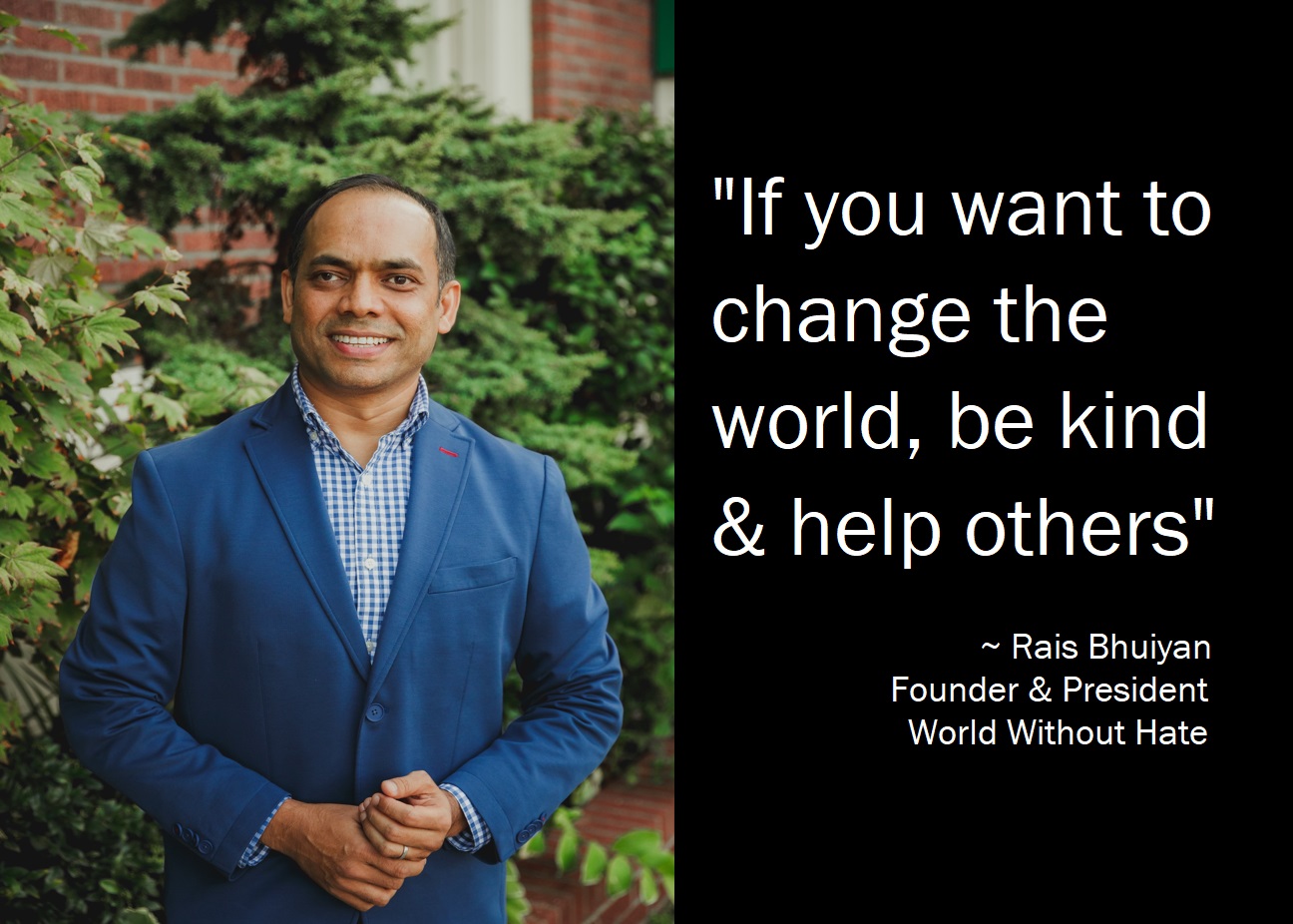
~ Rais Bhuiyan, Founder & President, World Without Hate
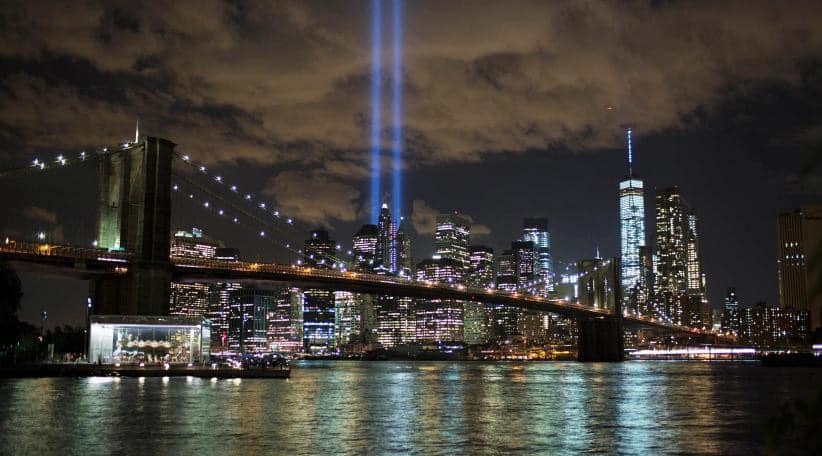
Today marks 18 years. September 11, 2001. I will never forget. But, have we begun to forget as a country? As the years roll on, are we pausing less to remember the day terror reigned down on us? Are we allowing the impact of that day to slip away? A new study suggests that Americans move on from mass shootings after just three weeks. This is 18 years.
At the moment I’m feeling numbness. These last few anniversaries I’ve begun to feel farther away, somehow more disconnected. Perhaps because I have created a 3,000-mile barrier between Manhattan and myself. I’m not entirely sure. Perhaps, like my husband has said speaking of his own 9/11 terror, that at some point it feels like your telling someone else’s story.
I’ve always been quick to point out that I was fortunate beyond measure on that incredibly beautiful, sunny New York day. And I truly, truly was. But it doesn’t mean that I have been ok. It doesn’t mean that I don’t STILL suffer from the post-traumatic stress of living and studying in the city during 9/11.
Every anniversary, if I sit still long enough, I can hear the short, chaotic breaths I was gasping, taking me back to third avenue as I ran north with thousands and thousands of others. Not a single taxi, bus, or moving car to be seen. Though the beating of my heart has quieted some, I still catch myself, immediately and unconsciously turning towards the sky when a jet engine seems all too close. I remember the smell. And the ash as it began to collect on my apartment’s windowsill.
September 11th took thousands of lives, robbed families of loved ones, and irreversibly changed more lives than anyone will ever truly know. I never really admitted, or wanted to admit, that fateful September day changed my life forever. I most certainly never thought someday, I’d marry a man whose life was not only nearly taken because of 9/11, but devastatingly, not truly ever recognized or supported as such.
Today, Rais and I have dedicated our entire lives trying to do our part to make a positive, peaceful difference for others. At home, I also strive to bring him peace, safety, and love as well. Just as so much of history has done before, our country’s 9/11 story is selective about who we remember and commemorate. I would certainly not eliminate a soul from the list, simply add other innocent human casualties to our roster. Too many suffered hate in the immediate aftermath of the terror attacks. To this day, so many more continue to be persecuted, harmed, and even killed because of the horrendous terror we experienced on this day, eighteen years ago.
Rais and I are working today, a day of service with thousands of others in the Dallas area. I will also take time to quiet my mind, and my heart, as I try to do each and every September 11th, sending love, light, and hope to all of those who lost their lives, lost their loved ones, have succumbed to illness, or are still battling, as the brave first responders and rescuers they were. I also remember the most touching, awe inspiring ways in which we, Americans and human beings, came together – even in the literal crushing of towers, utter chaos, and debris filled streets. We cared for one another mere minutes, hours, days, weeks, and all these years later.
I urge us all to Never Forget. I plead that we care for one another like we did that day. On this eighteenth anniversary, and always, take a few moments to remember how infinitely precious life is. Recall all those who so senselessly lost their lives. Reflect deeply on the compassion, care, and love shown so instinctively and powerfully by so many of our fellow Americans. And I would also urge you to think deeply about those victims, like my husband, who paid (and continue to pay) so dearly for someone else’s crime. Let’s not only recognize these victims of hate and violence, but embrace them on this day of remembrance, and always.
-Jessica C. Bhuiyan, Executive Director, World Without Hate
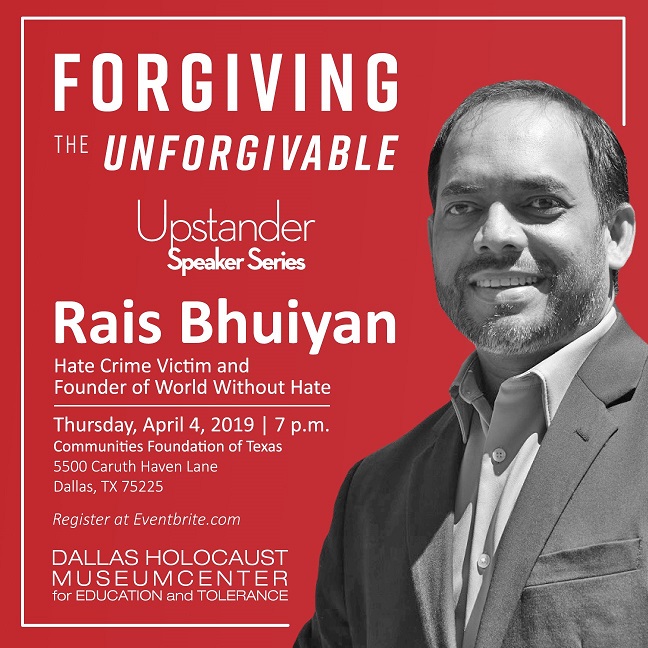
Rais Bhuiyan was shot point-blank in a near-fatal hate crime ten days after 9/11. Not only did he forgive his attacker, he also fought to save his attacker’s life. Richard McKinney planned to detonate an explosive at a Mosque. After he was given a Quran, everything changed.
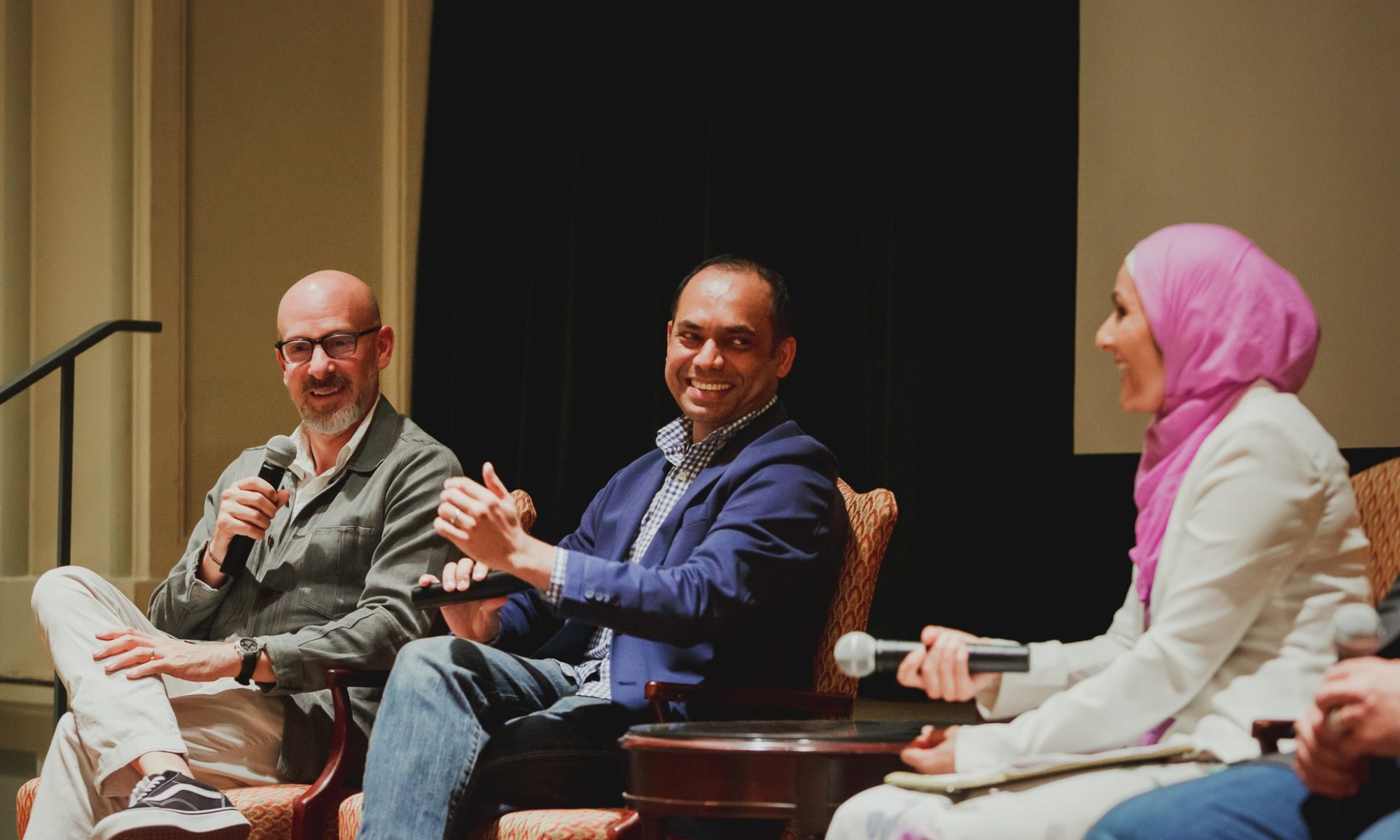
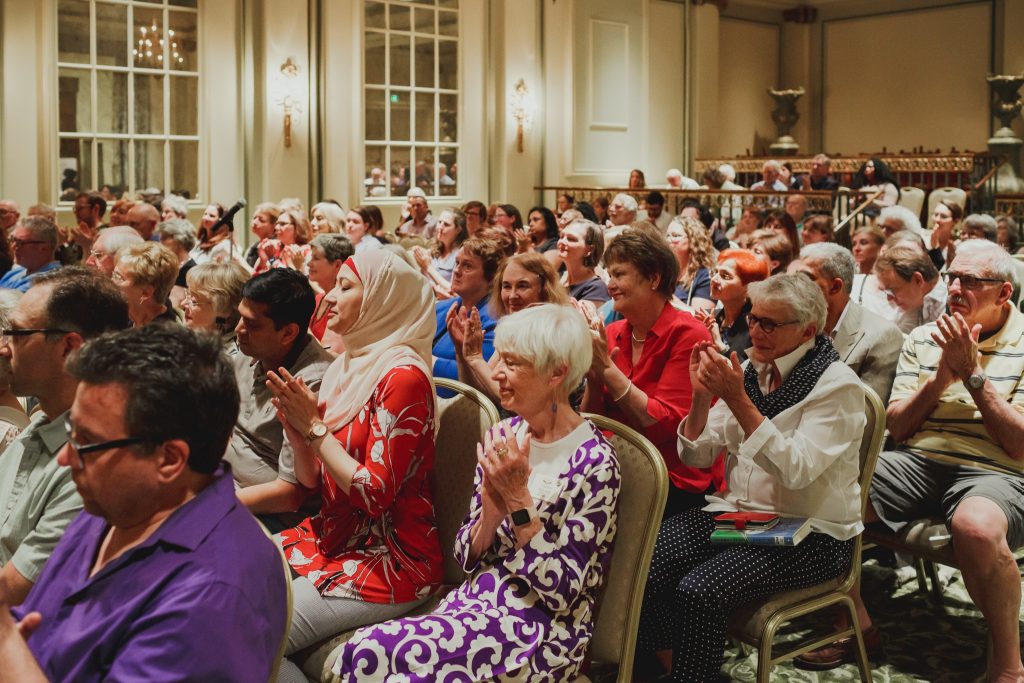
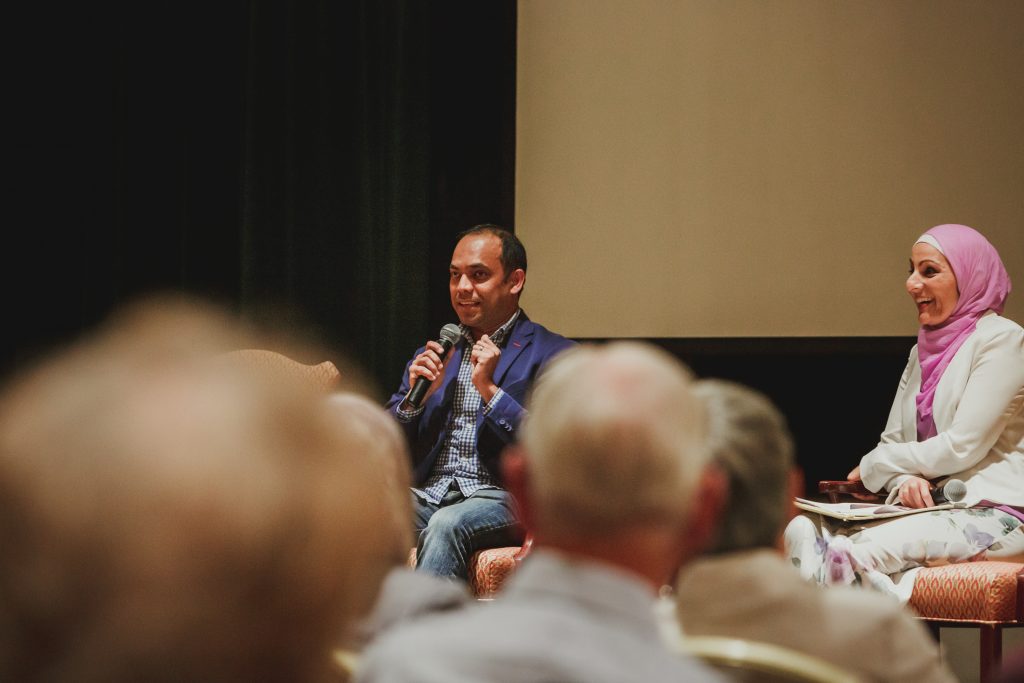
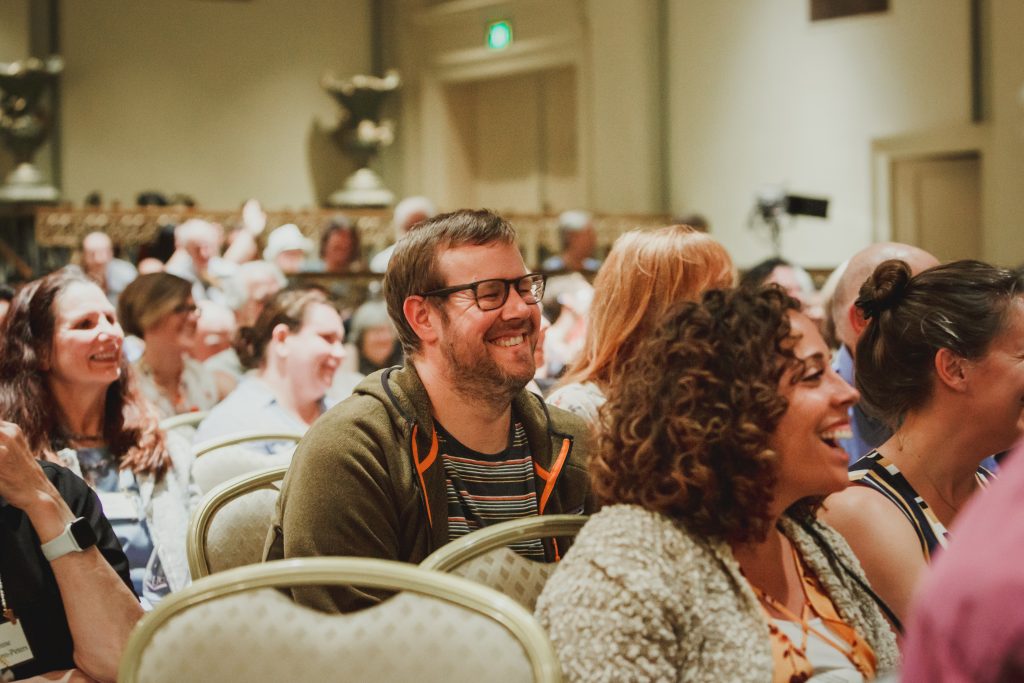
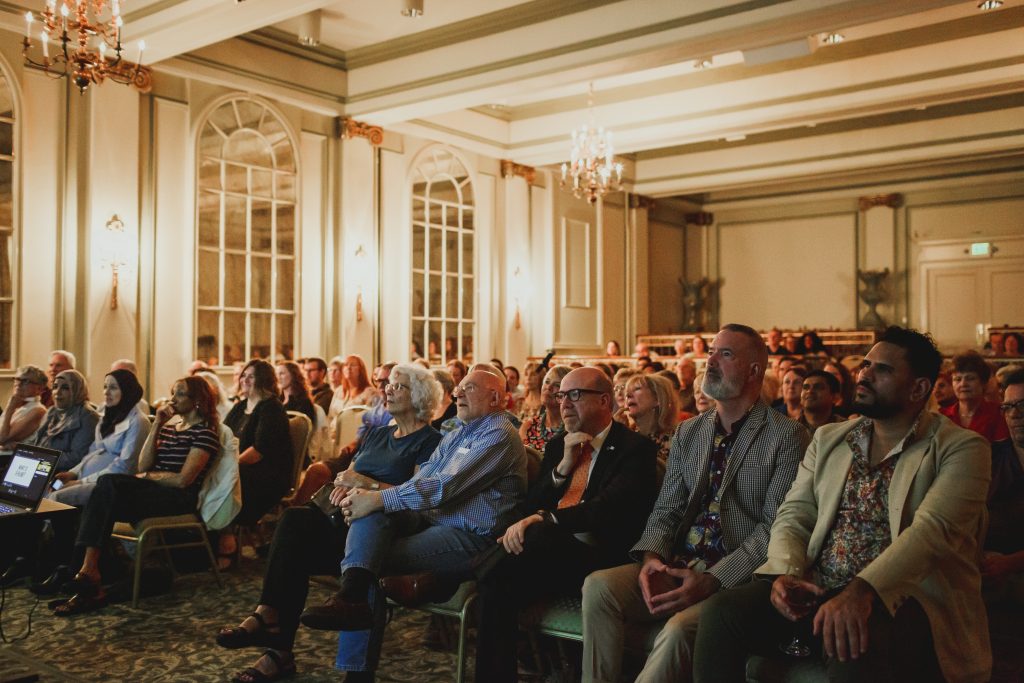
In a special film screening and discussion, hear from these two men who have traveled on unbelievable journeys from hate to love, joined by Joshua Seftel, the filmmaker who told their stories for the Emmy-nominated series of films, “The Secret Life of Muslims.” This event, moderated by Seattle’s own Aneelah Afzali, Executive Director of the American Muslim Empowerment Network (AMEN) at the Muslim Association of Puget Sound (MAPS), is a testament to the power of redemption, showing just how much is possible when we choose to overcome hate.
What is The Secret Life of Muslims?: If you watch CBS Sunday Morning, listen to NPR, use Facebook, read USA Today or attend SXSW, you’ve likely already encountered THE SECRET LIFE OF MUSLIMS, a series of short-form, first-person documentary films that uses humor and empathy to subvert stereotypes and employs a cutting-edge distribution strategy, making it available on TV, radio, the internet, and at live events from NYC to LA.
Featuring a diverse set of American Muslims from a wide range of ethnic and national origins speaking directly to their own respective experiences, the series illuminates the existing complexity and diversity of America’s 3.3 million Muslims, while pointing to a common shared humanity. The first season has been viewed more than 56 million times in our effort to contribute to a dialogue of tolerance and peace in contentious times.
This very special event is a testament to the extraordinary partnership of the Women’s University Club Foundation, City of Seattle’s Human Rights Commission, Rotary District 5030 Peace Builders, Seattle 4 Rotary Peace builders, PopUp Justice, Social Justice Film Festival, Muslim Empowerment Network at the Association of Puget Sound, Meaningful Movies, Seftel Productions, Smartypants Films, World Without Hate.
This
past week marked the 8th anniversary of my attacker’s execution. Ironically
perhaps, this past week we witnessed the Commander in Chief’s vitriolic racist
attacks of fellow elected officials garnering security concerns for the lives
he has put at risk. I often tell others that I work to make peace with my pain
every day, but unimaginable days like we continue to see from the President of
the United States makes it exceedingly difficult, to say the least.
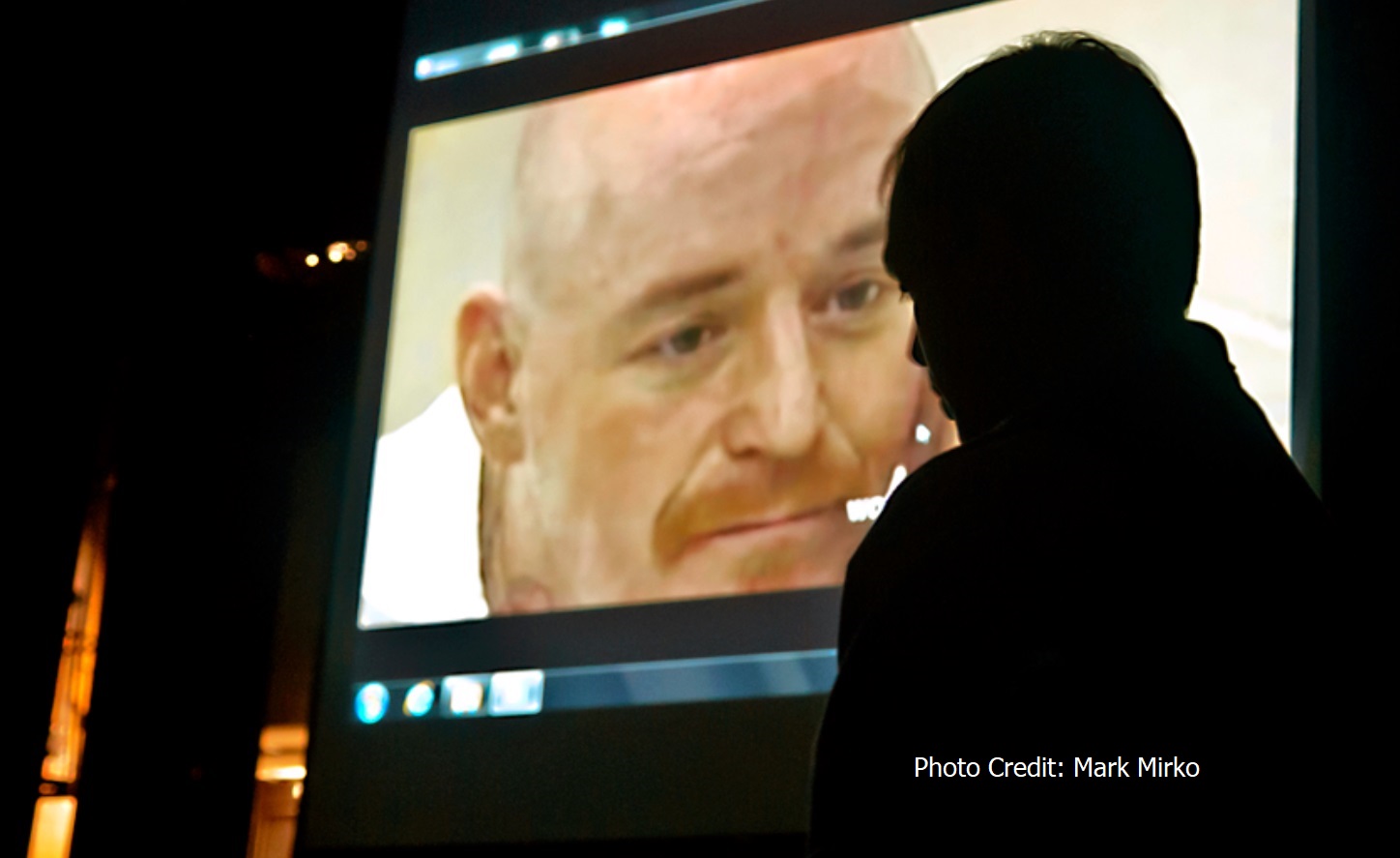
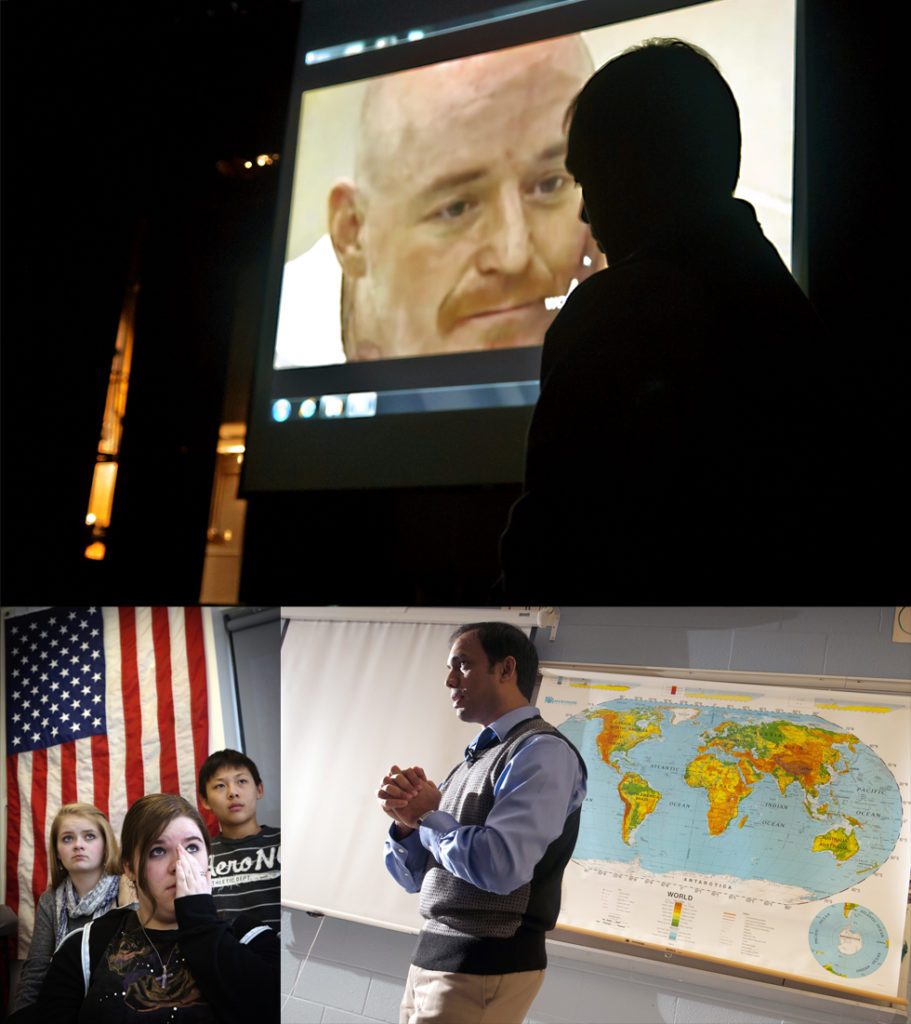
Photo Credit: MARK MIRKO | mmirko@courant.com
Before pulling the trigger, my attacker asked, “Where are you from?” My brown skin not welcomed in his “white” America. Though narrowly escaping with my life, I still carry more than three dozen bullet fragments in my face and skull and am blind in one eye, these just the physical reminders of America’s racism and intolerance towards me and “my kind” immediately following 9/11.
Devastatingly,
it seems I’m not welcomed in Trump’s America either. And while he puts elected
officials’ lives in danger, he also puts mine, and so many others like me, in jeopardy
too. In addition to my sight, my attacker took from me my sense of safety and
security. Nearly nineteen years since my shooting and still, the only place I
truly feel safe in America is past the security checkpoint at the airport.
Trump’s hate speech and white supremacist ideology is dangerous. Dangerous for
millions of minorities who proudly call themselves Americans. Dangerous for the
security of our country. Dangerous for the future of our country. Dangerous for
our ideals and all that our country was built upon. Dangerous, alas, for me.
The
stark difference between my attacker, Mark Stroman, and President Trump is that
Mark transformed. Unfortunately, it was on death row that he felt free, loved,
and respected as a human being. My assailant realized how wrong he was,
especially when he had others around him to support his learning and growth.
Before his execution, Mark said he loved me, thanked me for campaigning to try
and save his life, and called me “brother.” I will always be sorry that for Mark
it took killing two people, nearly taking my life, and ending up on death row
before he was able to know forgiveness, compassion, and empathy and to give it
in return.
This tragedy took a great deal from me, but it also paved the way for my life’s purpose and the organization I created, World Without Hate, as a result. Before his life ended, Mark Stroman’s last words were, “Hate is going on everywhere and it has to stop. Hate causes a lifetime of pain.” I’ve dedicated my life to disrupting hate. Today, I implore President Trump to stop the hate, and the danger he is inciting, and instead unite us all as human beings first. Before it’s too late.
~ Rais Bhuiyan, International speaker & Founder of World Without Hate.
“Today’s rhetoric is hauntingly familiar of the Nazis when they created their anti-Jewish propaganda that ultimately led to the holocaust; exterminating Jews, communists, Polish-Catholics, Gays, Romas, priests, and others. During the Nuremberg trials, SS leader, Heinrich Himmler said, “The best political weapon is the weapon of terror. Men may hate us, but we don’t ask for their love, but for their fear.” We had to terrify our own people, force them to fear the supposed enemy, so no one would say anything when Jews and others were dragged out of their homes, snatched from the street and captured.
We are, once again, witnessing similar rhetoric, including those from our leaders and the media. Creating fear, labeling people as a threat, denouncing and dehumanizing them, seemingly making it easy to persecute, and as a society, we are to feel relieved the “BAD guys” are off the street. My attacker repeatedly said that watching the same footage of the planes hitting the twin towers and listening to politicians blaming Muslims for 9/11 – he snapped, and took up arms against innocent human beings. At the end, he lost his life along with two innocent victims, brought tremendous pain and suffering not only to his victims and their families but also to his own, while those who inspired him still enjoy the benefits, they earned by selling hate and fear. It’s the same story in Christchurch, NZ, Pittsburg, Charleston, Quebec City and the list goes on and on. What the terrorists seem to forget, every single time, is that through the devastation, heart wrenching pain and loss…we rise. We grow stronger and become more closely connected. We grab onto hope, harder than ever before. Humanity and love prevail. ” ~ Rais Bhuiyan

 Shortly after moving North to attend a large public university, it was clear to me that I was more like “them” than the “us” of my youth. My closest friends in college included students from many ethnic, cultural, and religious backgrounds. I was intrigued by our differences and free – for the first time in my life – to challenge the racism and bigotry that I saw. (As a kid in my family, questioning an adult’s belief was often seen as “being sassy” and disrespectful.)