When
temperatures reach triple digits, we feel miserable, but four digits
are beyond fathomable. Now imagine, suddenly your city’s temperature
rises to 7,323 degrees Fahrenheit (4,000 degrees Celsius). You burn
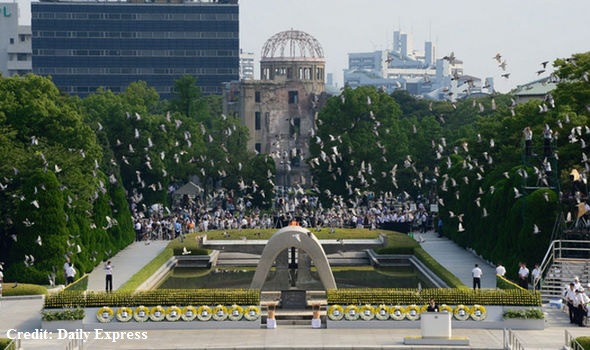
instantly. That’s what happened to the people of Hiroshima on Aug 06,
1945. The “Little Boy” showed the entire world its enormous destructive capacity, taking 140,000 lives. A dark chapter in human history to be sure.
World
War II is over, but the scars, traumas, and threats of evil still
exist. The massive destruction of that war and the degradation of
humanity was clearly not enough loss for us to come to an understanding
and agree to avoid war, find solutions to conflicts through dialogue and
save human lives.
It’s never too late to do the right thing.
After
72 years since the Hiroshima nuclear bombing, we can still urge our
leaders to find ways to abolish Nuclear weapons, instead of spending
money on maintaining the existing 15,000 stockpile and further
production. We should utilize our resources on peace building, educating
one another about the power of mercy, compassion, forgiveness,
acceptance and understanding. Let’s (new) clear the world from hate,
violence, and ignorance by teaching empathy, mercy, and forgiveness, and
building the world we all deserve – a world without violence, a world
without victims, and a world without hate.
~ Rais Bhuiyan
During my recent visit to the Bill and Melinda Gates Foundation
in Seattle, a simple, but extraordinarily powerful exhibit depicting
the distances that millions go through every day for clean water,
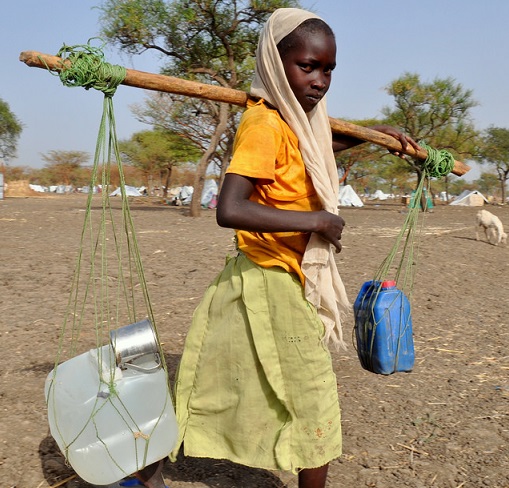
touched me deeply. A one gallon (4 liter) bucket sat on the floor, next
to it, a loop of bare footprints, and a sign reading, “What is it like
to walk for water?” Millions of people around the world walk three or
more miles just to fetch clean water. A family of 3 needs a minimum of 5
gallons of water for each person, every day, – that’s 15 gallons and 9
miles. I did the math for my family right way, 40 gallons and 24 miles!
There would be no time or energy for any other tasks except carrying
water every day. By the mercy of God,
I’ve never had to walk even a foot for water, but I have seen others
struggle, feeling for them, and always appreciating my own blessings of
easy and convenient access to clean water.
As a part of my appreciation, I also try hard to use it wisely, including but not limited to:
pouring into the glass only what I would drink
turning off the faucet while brushing teeth or scrubbing the dishes
turning off the shower while using soap or shampooing hair
turning off faucets in public places if it was not turned off properly
I understand these steps won’t affect the people who are struggling,
but it helps the conservation efforts of our most precious resource.
Perhaps even more importantly, it reminds me to be a better human,
remaining aware of my fellow human beings’ suffering, and in
appreciating what I have, finding ways in which I might be able to
assist those who don’t have what I do. (There will be information and links to ways in which you can also help those in need of clean water at the end of this post).
Currently, I am observing the holy month of Ramadan. Among many other
things, I am fasting between sunrise and sunset. While conservation is
important, during Ramadan, we also temporarily deprive ourselves from
water and food so that we can feel a just a slice of the pain and
suffering that so many endure, each and every single day. Their hope for
an end to this struggle, this basic and inherent human right, extends
far beyond my 30 days.
Every morning, before getting out of bed I grab a sip of the water I
keep on my bed stand. The last few days have been different, however.
The water is there, but I choose not to drink it. Next, coffee with
breakfast, which I also skip. By noon, my stomach starts complaining. By
4pm, it’s nagging at me, fatigue and weakness set in, and my mouth
seems to get drier. I feel like I could drink gallons of water and a
table full of food. My body is pleading, but my mind is controlling the
need. It’s a power struggle between mind and body
no doubt, but this annual exercise helps turn weakness into strength,
to be mindful and more patient, and to be a more compassionate and
empathetic person.
Ramadan,observed during the ninth month of the Islamic calendar, is
practiced by Muslims around the world. This month of fasting helps us to
acquire piety, discipline, patience, compassion, empathy, and over all
self-control. Ramadan is indeed tough, but truly rewarding spiritually,
physiologically, and socially. It’s an opportunity for self-cleansing,
feeling the plight of the poor, needy, and deprived.
The first few days of fasting is the hardest. Then, I feel almost
immune to hunger and thirst. Instead, I feel as though I have a much
better understanding for how people go with little to no food and water
for hours on end, in many cases, for days and days. Of course, those who
lack access to water, also live in food deserts and often can’t even
provide one meal per day for themselves or their children. On top of
this, in many cases, there are constant threats of violence, bombings
and killing that take place in these incredibly oppressed areas. I
can’t help but think about the mothers who can do nothing more than hold
their children as they die from malnutrition; or the elderly who must
beg on the street or go door to door, grateful for anything they can
find, desperate to live like a human being. I think about the sick who
can’t afford food or medicine. My heart breaks for the 20,000 people,
and the four children every minute, who die every day from hunger or
hunger related causes (according to UN). The statistics in the United
States are also horrifying; one in four children go to bed on an empty
stomach.
And so, while 30 days of fasting won’t solve these issues, it does
help those who sincerely seek to be more giving, educating and
motivating them to go out of their way to help those in need. While my
family is not currently at risk of going hungry, my elderly parents not
having to beg on the street, and I don’t need to walk three miles for a
clean bucket of water, I do have the power to feel for those that do,
show them solidarity and support the organizations dedicated to making a
real difference in their life.
I urge you to challenge yourself by fasting—for a day or a few—and
encourage others to join you, to understand the plight of millions,
half-way around the world and right next door. Join me in showing your
empathy, sharing your compassion, and demonstrate your support by
finding the causes and organizations you can contribute to.
We must remember we are responsible for one another, we must learn to
respect, understand, accept, and support each other if we want to bring
about the world we all deserve – a world without hunger, a world
without violence, a world without victims, and a World Without Hate.
Written by: Rais Bhuiyan, Founder & President
To learn more about The Bill & Melinda Gates Foundation and their work for clean water, and so much more, visit http://www.gatesfoundation.org/.
“I felt hurt when I found out my friend
was cutting herself.” A courageous young student shared this moment
during a recent exercise in World Without Hate’s Empathy Ambassador Leadership Training Program.
This student, and her friend, are in junior high school. Junior high.
Another student shared his heartbreak after his father left home, having
done so before, he figured his dad would come back, but not this time.
One student shared the hurt and confusion she felt when her mother was
deported, torn from her family for two years. When trying to recall my
own middle school experience, girls giggling about crushes, who might be
“dating” who, or whether you were shaving, are memories more easily
conjured up. But, today, students are contending with tremendously
serious issues — from cutting and abandonment, bullying and death,
hunger, isolation, and deportation.
For two days, World Without Hate staff,
board members, and our talented, generous facilitators convened in
Dallas for our workshop. Empathy Ambassadors is a
multi-faceted, cultural and experiential, program for young people,
exploring the interconnectedness of self, other, and community, as well
as awareness, connection, inclusion and conflict resolution.
The program asserts the immeasurable
worth of individuals regardless of age, gender, sexuality, ethnicity,
intellectual ability, economic background, and so on. It encourages
students to build bridges among one another and within their
communities, working toward creating a new, vibrant human community
which embraces all.
Through active participation, the
program asks students to begin to bear some of the responsibility for
ensuring that none of their peers ever feels bullied or isolated, and it
provides them with the tools needed to create the environment within
which this can happen. Staff and facilitators come to each session not
to present the program, but instead to guide the individual and
collective journey, the one participants create together with the tools
shared. Facilitators are also equipped to take proper care, as well as
legal and moral action when students share serious issues, such as
self-harm, ensuring continued and follow-up support and treatment is
available to them outside of the program.
Today as I observe this group of 7th and 8th
graders, I find myself in awe, not only by the range and severity of
the issues they face, but even more so, by the courage, strength and
authenticity they have brought with them. Shy and quiet participants,
though with some hesitation, still stand tall as they share their unique
story with fellow peers. Others confess not exactly knowing why they’ve
been selected to participate, but are intrigued. It is those same
students who have approached their teacher at lunch, thanking him for
seeing what they could not, just hours before. Some students join us
again, another year older, but clearly wiser, more confident, caring and
invested, both in their own leadership development as well as their
peers.
Our host tells me, “This program has absolutely changed my students’ lives.”
As I engage in this program for the
second year, I am amazed and overwhelmed. Not only are these students
learning about empathy, compassion, understanding and acceptance, but
they are utilizing the tools provided to connect to one another, many
having only shared the same school before today. During one exercise,
students assemble groups, work together and later enthusiastically
present their ideas for community and societal issues they want to help
solve. These students, these future leaders, these Empathy Ambassadors, are living proof that our future is absolutely a bright one.
World Travel & Tourism Council
World
Travel & Tourism Council works to raise awareness of Travel &
Tourism as one of the world’s largest industries. Join the conversation –
#WTTC
Beyond Borders, Beyond Hate
Contributed by Rais Bhuiyan, Founder & President,World Without Hate
“Travel
is fatal to prejudice, bigotry, and narrow-mindedness, and many of our
people need it sorely on these accounts. Broad, wholesome, charitable
views of men and things cannot be acquired by vegetating in one little
corner of the earth all one’s lifetime.” — Mark Twain Read more….
The recent tragic event in Orlando, FL
is truly barbaric, despicable, and an act of pure evil. I am speechless.
I am beyond shocked. It has been extremely difficult to find the right
words to express how tremendously devastating this terrible hate crime
truly is.
I can only speak from my heart; as an
American, a Muslim, a peace activist and human rights advocate, and as a
hate crime survivor myself. From my experience, I know at this time,
I can only offer my profound sympathy to everyone who has been touched
by this unspeakable act of violence. I empathize with the victims,
survivors, and their loved ones. Their lives–all lives–should never have
ended or forever been altered in such a horrific and tragic way. My
deepest, heartfelt condolences go out to the victims, survivors, and
everyone whose life got torn apart by this shooting. I am praying that comfort and peace may come.
This incident, yet again
(sadly) highlights the need for all people of heart and good conscience
to dedicate themselves toward a pursuit of better human behavior, better
human relationships, a better world…a world without such hate,
intolerance and violence. We should not only mourn as a nation, but also
work together, regardless of ethnic and cultural background, religious
beliefs, sexual orientation, or skin color, to make America safe for
ALL. We must build bridges among each other. We must embrace one
another, our diversity and uniqueness, and our incredibly
varied communities.
Please understand that pointing fingers, blaming, or dehumanizing anyone or any group who had nothing to
do with this (or any) evil act is not only dangerous, but will further
divide an already divided nation and cause even more innocent victims.
I urge us all, I plead, show respect to
your fellow human beings, regardless of how angry you are or how much
pain and suffering you are enduring in your own life. Please do not take
your anger and frustration out on others. Please don’t buy into some
media’s discriminatory presumptions. Please remember, though it may seem
impossible at the moment, that love conquers hate in the end.
We all deserve a peaceful, respectful,
and dignified human life. To help make that possible for everyone, take
the time to reach out to family members, friends, or neighbors who may
be going through challenges instead of ignoring them. By doing so, we
can help save many innocent lives.
At a recent event, in reference to
such conflicts as bullying, aggression and terrorism, my interviewer
asked, “Shouldn’t we fight back, shouldn’t all criminals pay for their
crimes?” My response was that while punishment is needed to maintain
justice, law and order in society, it does not need to completely
destroy a person, their life or his/her family. Rather, the criminal
justice system should serve to repair and give the perpetrator a second
chance to become a better human being. As I have learned, ‘justice isn’t
truly served if not tempered with mercy.’
Justice can be served without violating
HUMAN RIGHTS and DIGNITY. Years after my shooting, not only was I able
to heal physically, emotionally, and mentally, I also let go of any
bitterness in my heart, finding it more important to forgive. In doing
so, I was not only able to focus on enjoying my life and the company of
my loved ones again, but also saw the possibility of a world based on
mutual respect, compassion, empathy, and understanding.
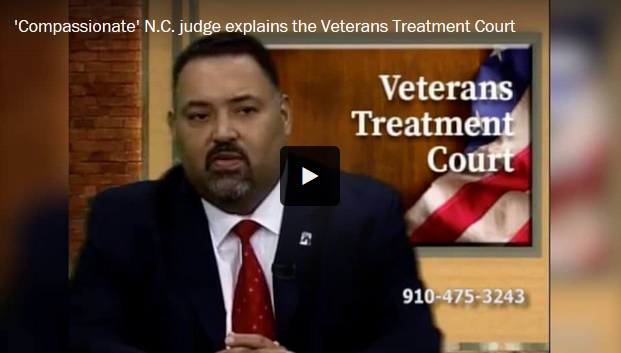
I hope you have seen this story in the
news. If not, I encourage you to take a moment to read it: A
compassionate judge sentences a veteran to 24 hours in jail, then joins
him behind bars. This is an incredible example of justice with mercy,
compassion, and empathy at its core. Our world needs more judges like
Lou Olivera!
My name is Rais Bhuiyan. I am an
American Muslim and survivor of a violent post 9/11 hate crime. I
deplore the acts of violence and hatred that are wrongly performed in
the name of my religion, they do not represent me or my beliefs, and
they do not reflect the lessons taught in the Qur’an. I also
denounce all manifestations of hateful acts and rhetoric.
While I respect you for obtaining the
GOP nomination for President, as such a leader, I
urge you to learn about and get to know the minorities and immigrants
who call the United States home. Like all of humanity, American Muslims
are an integral part of our society. They are doctors, lawyers,
teachers, first responders and firefighters, business owners, police
officers, and peace activists, like me. Over 10,000 American Muslims
currently serve in the U.S. military and are ready to put their lives on
the line to protect our freedom and liberties. American Muslims, like
their fellow citizens, are patriotic Americans, who have been living and
shaping the landscape of this country for centuries. Ten to 30% of the
people brought here as slaves were Muslims who fought during the Civil
War, WWII, and the Vietnam War. Many gave (and continue to give) their
lives to protect your freedom, liberty, and happiness, contributing to
building this great country. It not only devastates American Muslims
like me when our country’s leaders question our allegiance, it sends an
extraordinarily distressing message worldwide. You have a unique
position in American society, people take your words
seriously, they listen to and believe you.
Your vitriolic, hate-filled rhetoric and
ignorance is not only causing others to lose their civil and human
rights and dignity, but in some cases, also inciting such abhorrence and
violence that innocent people are losing their lives. Freedom of speech
is one of the most cherished rights we enjoy, but was not fought for to
be used as a blank check to ruin other peoples’ freedom. It is
imperative that you properly represent all Americans, including Muslims,
Mexicans, African Americans and immigrants — voters, citizens,
professionals, family members and loyal Americans. A great leader
represents everyone, even those who do not support him. As citizens of
this nation, we should be doing things to strengthen and empower one
another, not discouraging or demonizing some among us, and not
casting doubt upon their loyalties and love for our country.
I have spent my life preaching the value
of radical forgiveness, compassion, empathy, and acceptance ever since I
was shot in the face ten days after 9/11 by an American espousing
values similar to the ones you voiced. I know how tempting it was to
BLAME the whites, the Christians, or all the Americans’ because of the
white supremacist who shot me in the face and killed two innocent South
Asians and voluntarily told the media, after his arrest, that what he
did, most Americans wanted to do, but they did not have the guts to
do it. He BLAMED me and “my kind” for 9/11. He thought that America was
no place for Muslims until I started a campaign to save him from death
row. Unfortunately, he was ultimately executed, but not before he called
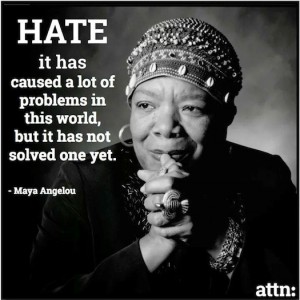
me “brother” and he said that he loved me. His last message was, “Hate
has to stop, it causes a lifetime of pain”.
America needs to understand, to repair,
and to heal. America does deserve better. We deserve better treatment
from ourselves. We deserve a country that lives up to its original
creed – that ALL men (and women) are created equal. At a time when most
Americans were uninformed, misinformed, or simply afraid of Islam,
Thomas Jefferson imagined Muslims as future citizens of his new nation.
His engagement with the faith began with the purchase of a Qur’an eleven
years before he wrote the Declaration of Independence. “Neither Pagan
nor Mahamedan [Muslim] nor Jew ought to be excluded from the civil
rights of the Commonwealth because of his religion.” — Thomas
Jefferson, quoting John Locke, 1776
Your recent comments against Muslims,
Hispanics, Blacks, and immigrants are spreading fear, hate, and causing
destruction in our society, and it’s not healthy. Your recent speech
reminds me of the famous quote of Abraham Lincoln – “America
will never be destroyed from the outside. If we falter and lose our
freedoms, it will be because we destroyed ourselves.”
I urge you to stop spreading fear and
hate, putting Americans against one another. Instead, just imagine each
time someone gets shot or killed, faces hate or prejudice that it is YOU
or one of your loved ones. For God sake, please have some empathy and
compassion for those who go through each and every day wondering if they
might be next, terrified to leave their homes, unable to practice their
basic rights as citizens and as human beings. Please step up and make a
positive impact today. History will remember you for what you did for
humanity.
I would welcome the opportunity to sit
down with you, as one American Muslim, to talk with you
further about the contributions that American Muslims can make to
improving our national security and helping this nation to be the best
it can be. Muslims have value, Mr. Trump, and all Muslims are not
violent. I would like to demonstrate these truths to you.
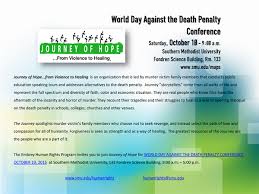
If you are in the Dallas area, the Embrey Human Rights Program
invites you to attend Journey of Hope’s World Day Against the Death
Penalty Conference. The conference will take place on Saturday, October
10 from 9am-5pm. and will be held at Southern Methodist University, 133
Fondren Science Building.
From Journey of Hope:
“Journey of Hope…from Violence to Healing is an organization that is led
by murder victim family members that conducts public education speaking
tours and addresses alternatives to the death penalty. Journey
“storytellers” come from all walks of life and represent the full
spectrum and diversity of faith, color and economic situation. They are
real people who know first-hand the aftermath of the insanity and horror
of murder. They recount their tragedies and their struggles to heal as a
way of opening dialogue on the death penalty in schools, colleges,
churches and other venues.
The Journey spotlights murder victim’s family members who choose not
to seek revenge, and instead select the path of love and compassion for
all of humanity. Forgiveness is seen as strength and as a way of
healing. The greatest resources of the Journey are the people who are a
part of it.”
Visit https://www.journeyofhope.org/world-day-conference/ for more information.
In 2010, when I was well on the road to getting my life back
together, I moved into an attractive apartment complex in Dallas. I
wanted to be polite to my new neighbors in the fashion of my culture, so
I made Bangladeshi rice pudding for everyone in my building. I put the
dessert in containers and went door to door to introduce myself and
present my gift. Most people accepted it graciously, even the ones who
had no intention of actually eating it.
At one door, however, I met with coldness. Nobody would answer the
door even though I could hear them inside. I tried three times to make
the acquaintance of that family, but I had no luck. I left. I told
myself that I had done my part, and they had made their choice. I hoped
that someday we would meet.
Several days later, I saw one of them in the parking lot. I will
call him David. I introduced myself. “Hello my name is Rais, I am your
neighbor living upstairs.” I suspected from his facial expression that
he was not interested in getting to know this neighbor. Nevertheless, I
invited him to come up to my apartment for a cup of coffee anytime.
We saw each other in the parking lot several times after that, but we
never exchanged anything beyond a “Hi” or ‘Hello” until one day when I
saw him polishing his car. We talked for few minutes about the materials
he was using, and I had a chance to give him my contact number and to
invite him to call me if he ever needed something.
Sometime later, on a Saturday afternoon, I was jogging near the
apartment complex when suddenly my cell phone rang. I answered it and
heard David say, “Hey Rais, I need a big favor from you. I was in a car
accident last evening, and I thought I didn’t need to go to the
hospital, but now I feel as though I am about pass out. My wife is
pregnant and can’t take me to the hospital. Can you please take me?”
I stopped jogging, ran towards my apartment, picked him up from his
house, and took him to the nearest hospital. While we were waiting for
the doctor, he asked if I could get him a Dr. Pepper. I had no cash or
credit card with me because I had rushed to get him, so I called a
friend and asked him to bring the drink or a dollar bill, so that I
could buy it from a vending machine. My friend arrived with a dollar
bill and I was finally able to get David his requested Dr. Pepper. He
was grateful, but curious as to what on earth had taken me so long.
During the four-hour emergency room ordeal, I kept updating his wife
about his condition. When he was finally released, I took him to a
Bangladeshi restaurant, bought him dinner, and got something to take
home to his wife.
The next day David asked if he could come up to my apartment and I
welcomed him. After he thanked me, he told me that there was something
he needed to say. I wondered if he still wanted to know why the Dr.
Pepper had taken so long, but I was stunned when he admitted, “I have
been treating you badly. I was ignoring you because you look as though
you are from the Middle East. You look like all those suicide bombers
and terrorists.”
I had known that David had not been eager to know me, but I had not
realized that he saw me as a possible suicide bomber! I was shocked!
David was educated, he had a good job, he was raising a family, and it
had been nine years since the 9/11 tragedy. Still, he had judged me on
the basis of my looks. And yet, something magical was now happening.
He explained how my assistance the previous day had opened his eyes and
changed his impression of me. He told me that I was the first Muslim he
had ever known, and that his previous impressions of Islam had been
based solely on media images. “I judged you without knowing you,” he
said.
David went down to his house and came back with a green baseball bat
in his hand. He gave me the bat and said, “From now on, you are my
brother, and if anyone says anything bad to you, you call me. I’ve got
your back. Keep the bat handy for protection in case you ever need it.”
While I have no intention of ever using that bat against anybody, I was
moved by my new friend’s concern for my safety.
Since that time, David and I have spent many hours together, and both
of us have grown and benefited from our friendship – a friendship that
would never have existed unless both of us had moved past first
impressions and had dared to reach across the artificial cultural
barriers that separated us.
I hope that World Without Hate allows all of us to do the same. It
is in sharing our stories that we begin the process. I look forward to
hearing yours.